
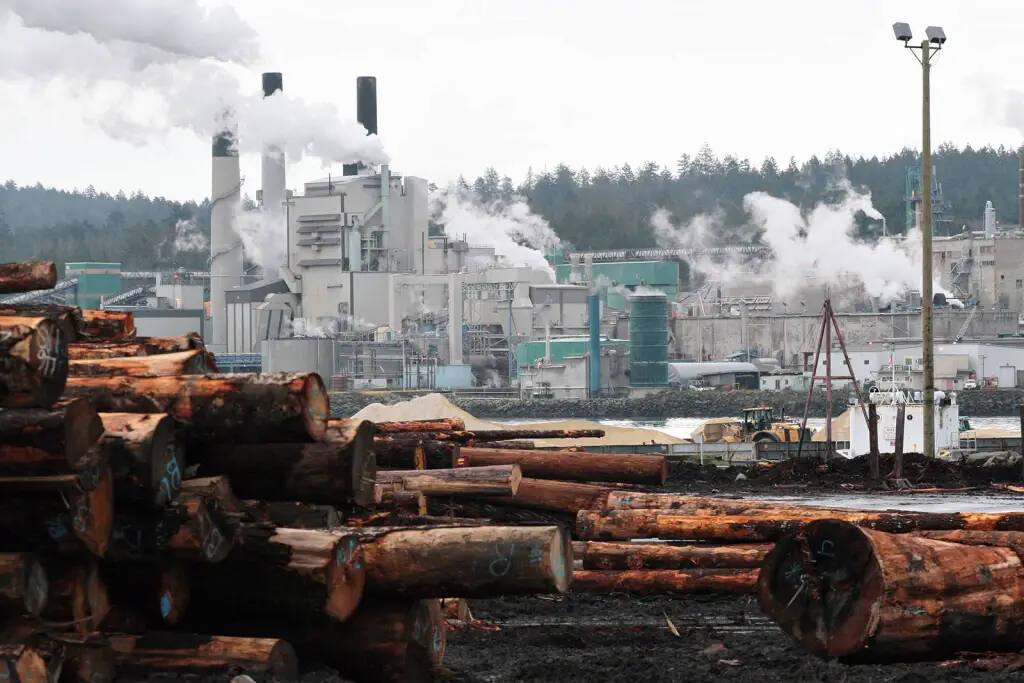
OPINION: ‘Anti-Harmac’ amendment targets key company in Nanaimo
Published 10:30 am Sunday, December 7, 2025
BY MARK MacDONALD
When the City of Nanaimo tabled a zoning amendment to Bylaw 4500 that could effectively change the heavy industry zoning in Nanaimo on Nov. 17, there was one main target: Nanaimo Forest Products Ltd.
NFP owns Harmac Pacific, ‘the little pulp mill that did,’ which continues to pay around 350 full-time employee-owners handsomely while maintaining consistent profitability, and is a major Vancouver Island success story. They’ve done that thanks to an employee ownership model that sees workers share in its profits, as well as clever leadership which has made several key investments over the years to keep the operation moving forward positively, despite the forestry industry’s continued lack of support from the province.
One of NFP’s key strategic moves was purchasing the 61 hectares adjacent to Harmac, which is industrial land. While politicos and bureaucrats and real estate insiders have decried the lack of developable industrial land in Nanaimo, by far the largest piece sits right beside Harmac. Developing that will benefit NFP and its worker-shareholders, companies that want to set up business in Nanaimo with ocean access, Harmac employees and taxpayers.
Why taxpayers? Because industrial and commercial land and properties pay a much higher level of taxation than do residential homeowners. If a city is wanting to keep residential levies down as it faces the need for growth, one way is to entice more industrial and commercial operations.
The anti-Harmac bylaw specifically targets bio-mass/cogeneration, thermal electricity generation from fossil fuels or biomass, liquefied natural gas, petroleum refineries, and anything else that might produce a whiff of emissions.
Not to mention that Harmac uses biomass to supply most of its energy needs and they use 100 per cent biomass to produce all of the electricity it supplies to B.C. Hydro – enough for about 20,000 homes in Nanaimo. It would make sense that future operations should include similar companies as fuel costs rise.
The original goal of having Harmac where it is – and Duke Point – was to move the industrial land out of town where exhaust wouldn’t impact local residents. This motion aims to curtail that. This amendment gives the city an excuse to study each and every applicant for the site, and handcuffs the owners.
What would the bylaw’s restrictions leave as options for NFP’s industrial land? Flower-pressing factories? Porches for whittling? Industrial land should be home to well-paying jobs. As one of my favourite writers used to say: “We need to offer our young people more of an economic future than providing coffee for kayakers.”
This is clearly an anti-development push against the 350-plus workers who invested their own money to pull Harmac out of bankruptcy in 2008 and keep them working.
NFP has been progressive in its thinking and pro-active in its movements, including purchasing the next-door industrial lands, from which these same shareholders will benefit as other companies choose to set up shop there.
Jobs on that site will be good them and for the local economy. An expanded industrial tax base could be expected to keep residential taxes lower.
Mark MacDonald writes for the Business Examiner News Group.
link