Meta Platforms, Inc., known globally as the parent company of Facebook, Instagram, WhatsApp, and Reality Labs, operates at the forefront of social media and virtual reality innovation. Understanding Meta organizational structure is crucial because it blends massive global scale with rapid technological shifts. The company’s complexity demands a structure that balances creativity, speed, and operational control. Meta’s structure plays a pivotal role in guiding product development, user experience, and strategic pivots toward the metaverse.
Overview of Meta Organizational Structure
Meta uses a matrix organizational structure that combines functional and product-based divisions. This approach supports innovation across multiple platforms while maintaining centralized leadership.
- Structure Type: Matrix (functional + product-based)
- Employees: Over 70,000 worldwide
- Key Executives: Mark Zuckerberg (CEO), Susan Li (CFO), Javier Olivan (COO)
- Adaptability: Highly flexible, enabling rapid shifts in priorities to align with emerging tech trends.
Key Characteristics of the Organizational Structure
Functional Divisions
Meta organizes its workforce into core functions such as engineering, product management, design, marketing, and operations. Each division focuses on specialized tasks, enabling deep expertise and consistent quality across all platforms.
Global Hierarchy
While product teams enjoy autonomy, ultimate decision-making authority resides with top executives. This centralized control ensures strategic alignment across the company’s diverse services and technologies.
Geographic Divisions
Meta structures certain operations by region, enabling localization of content moderation, regulatory compliance, and market strategies for North America, Europe, Asia-Pacific, and other territories.
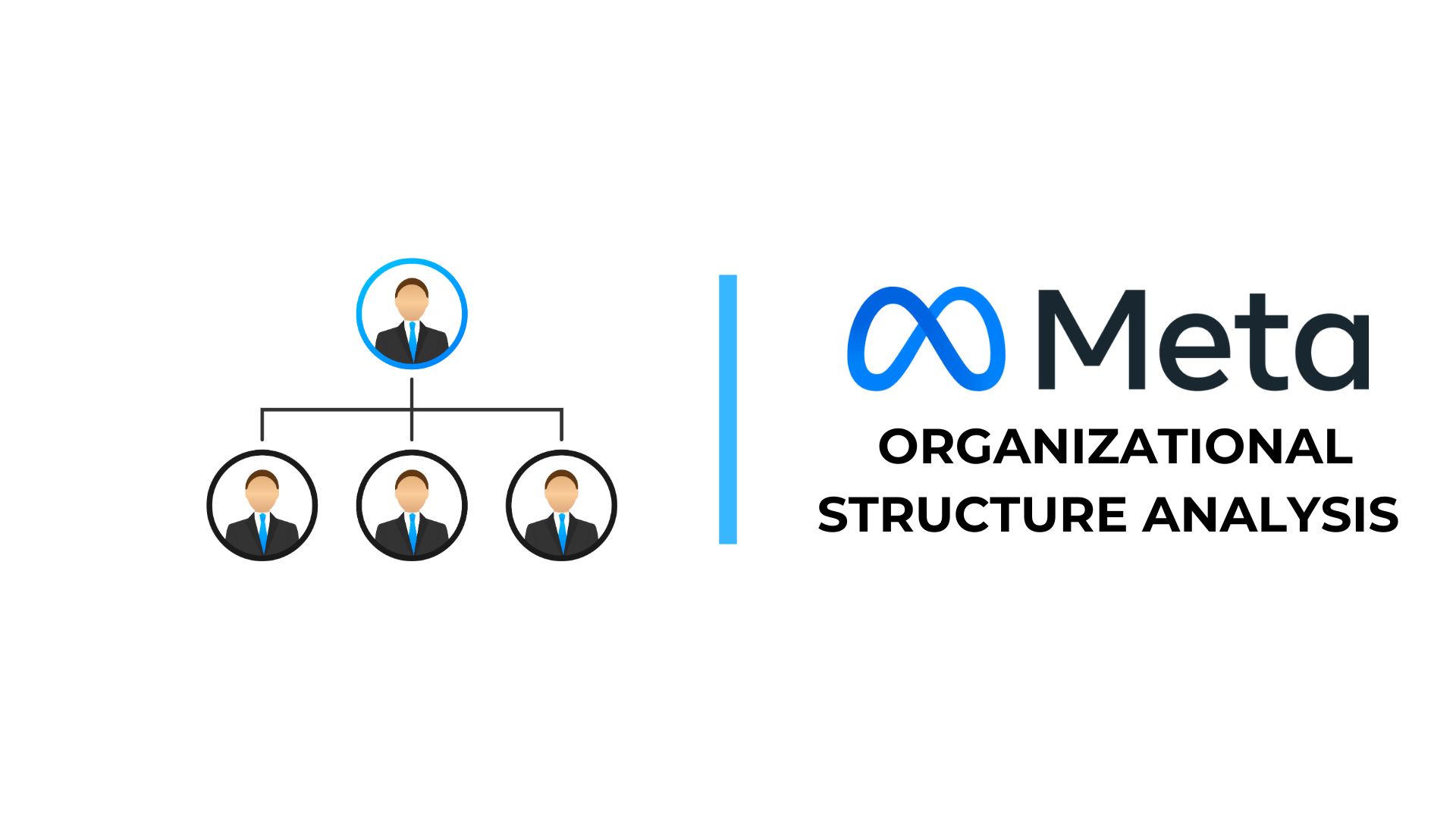
Organizational Chart of Meta
Meta’s reporting hierarchy begins with Mark Zuckerberg as CEO, overseeing all strategic and operational decisions. Directly reporting to him are C-level executives such as the CFO, COO, Chief Technology Officer, and Chief Product Officer.
Beneath these leaders are heads of product divisions—Facebook, Instagram, WhatsApp, Reality Labs—and regional directors managing market-specific operations. Cross-functional leaders coordinate efforts across engineering, design, and policy teams.
Why Meta’s Structure Works
Meta’s matrix structure supports innovation by fostering collaboration between functional experts and product-focused teams. Centralized leadership ensures a unified vision across diverse platforms. Regional divisions enable scalability and local market adaptation. This blend promotes quick decision-making, efficient resource allocation, and accountability—key to thriving in the fast-paced tech industry and driving its metaverse ambitions.
Conclusion
Meta’s organizational structure blends centralized leadership with product and regional flexibility, enabling it to innovate at scale. This design ensures that strategic goals are consistently aligned across platforms while adapting to local needs. Meta’s structure reflects its ambition to redefine digital interaction and lead the development of the metaverse, ensuring cohesion between vision and execution.
link