Retail investors are weighing valuation, brand momentum and international expansion as tariff risks and uneven U.S. demand reshape the sector. One analyst says select footwear and apparel names are positioned for a rebound.
BNN Bloomberg spoke with Zachary Warring, equity research analyst at CFRA, who pointed to discounted valuations, improving brand execution and growth outside the U.S. as key themes supporting his top retail picks.
Key Takeaways
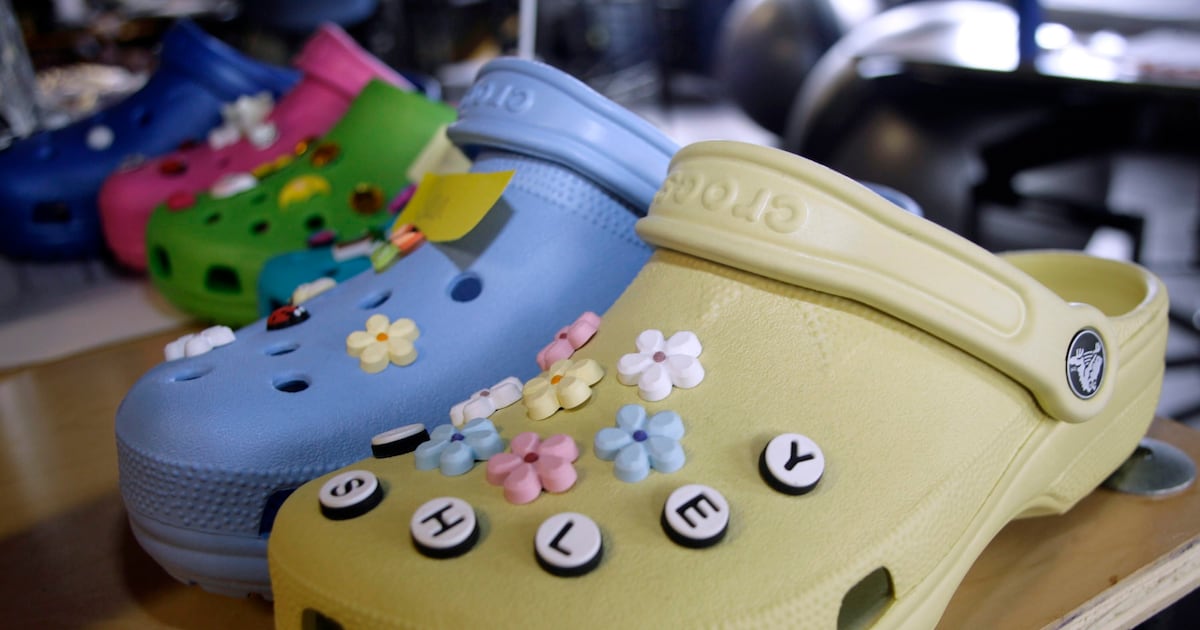
- Crocs is rated a buy with a US$96.88 price target, trading at roughly seven times forward earnings, with potential upside if HEYDUDE returns to revenue growth in the second half of the year.
- HEYDUDE, acquired for US$2.5 billion in 2022, was pressured by aggressive U.S. wholesale expansion and debt financing, but declines appear to be bottoming out.
- Abercrombie & Fitch is rated a buy with a US$93.70 price target, trading near 10 times forward earnings despite double-digit brand growth in recent years.
- Abercrombie expects at least 6 per cent net sales growth and earnings per share of US$10.30 to US$10.40, while raising capital spending to US$245 million and planning 40 net store openings.
- Deckers is rated a buy with a US$115.73 price target, trading around 16 times earnings, supported by double-digit growth at HOKA, steady gains at UGG and international expansion.

Read the full transcript below:
ANDREW: Time for Hot Picks. We’re zeroing in on the retail sector. Our guest has Crocs as his number one selection. He says the valuation on the shares is low and sees early signs of a turnaround at HEYDUDE, a brand Crocs acquired in 2022. We’re joined by Zachary Warring, equity research analyst at CFRA. Zachary, thanks very much for your time.
ZACHARY: Thanks for having me.
ANDREW: Remind us, what is HEYDUDE? Why was it a disappointment early on?
ZACHARY: HEYDUDE is another casual footwear brand that Crocs acquired. It was originally started in Europe and had strong growth early on, but the company pushed HEYDUDE through wholesale channels in the U.S. pretty aggressively in the first year or two. That created growth initially, but since then the brand has seen a significant decline. We think that over the last two or three years that decline has bottomed out. We still expect negative growth in the first couple of quarters, but in the second half of the year HEYDUDE could return to revenue growth.
ANDREW: Broadly, you say this company has room to grow in the U.S. What are its stronger markets?
ZACHARY: Crocs is obviously very large in the U.S., and it’s growing internationally. We think part of that international push is tied to tariffs in the U.S. The stock has a very low valuation, and management has executed well over the last couple of years outside of HEYDUDE, which has been the main drag. The valuation has fallen from the high teens on a price-to-earnings multiple to about seven times forward earnings, trading more like a department store. We think the valuation is at rock bottom. International growth should help insulate the company from U.S. tariffs and serve as a key driver going forward.
ANDREW: Your next idea is Abercrombie & Fitch. What does this stock have going for it?
ZACHARY: Abercrombie has performed very well. Over the last three years, the Abercrombie brand has delivered double-digit growth. The company also owns Hollister, and Abercrombie has grown significantly over the last two years. Guidance has come down, largely because of the strong growth in prior years. We think the company is handing the baton to Hollister, which is following a similar playbook. Abercrombie has done a good job with grassroots marketing campaigns and social media, and we’re seeing that approach applied to Hollister, which we think can drive the next leg of growth.
ANDREW: What is their target market? Are they more upmarket than, say, American Eagle?
ZACHARY: They are a bit more expensive than American Eagle, but they’re not high-end. They cater to young adults through millennials and have done a good job capturing that demographic. The stock had a significant rally over the last two or three years but has since come down. It now trades at about 10 times forward earnings. We think that represents a buying opportunity. It trades almost like a department store, but you’re getting better growth and better margins.
ANDREW: Finally, Deckers. What’s the attraction there?
ZACHARY: Deckers owns HOKA and UGG and has focused on those two core brands over the last couple of years, moving away from smaller brands. Both have seen significant success. HOKA is expected to grow double digits this fiscal year, while UGG is growing mid-single digits, which is strong for the footwear industry. At the same time, Nike has seen declines and lost market share, and we think Deckers has benefited. The stock trades at about 16 times earnings, a discount to Nike and peers like Adidas and On Holding. We like the valuation given the growth profile.
ANDREW: HOKA and UGG are both under the Deckers umbrella?
ZACHARY: Yes, that’s correct.
ANDREW: And they’re relatively upmarket brands?
ZACHARY: They are. HOKA is a premium running shoe brand that has gained traction in the U.S. and internationally. International expansion is another leg of growth, and that can also help mitigate the impact of U.S. tariffs. It supports both revenue growth and margins.
ANDREW: The HOKA shoes I’ve seen have a large logo. Customers seem to want people to know they paid up for them.
ZACHARY: Some of the newer versions can run upwards of US$200 to US$250.
ANDREW: And UGG — those well-known winter boots — do they sell to men as well as women?
ZACHARY: They do. The brand has become more popular with men in recent years, but its core target market remains women.
ANDREW: What’s important to remember when investing in a footwear stock?
ZACHARY: Across retail, companies want to connect directly with consumers. Direct-to-consumer offers better data, stronger customer relationships and higher margins. Nike leaned heavily into direct-to-consumer for several years but has recently shifted back toward wholesale. Footwear stocks often trade at a premium within retail. With Deckers at about 16 times earnings, we think investors are getting a discount. About a year and a half ago, the stock was trading at 25 to 30 times earnings, so the multiple has nearly been cut in half over the last 18 months.
ANDREW: Zachary, thank you very much. Zachary Warring, equity research analyst at CFRA.
| DISCLOSURE | PERSONAL | FAMILY | PORTFOLIO/FUND |
|---|---|---|---|
| CROX NASDAQ | N | N | N |
| ANF NYSE | N | N | N |
| DECK NYSE | N | N | N |
—
This BNN Bloomberg summary and transcript of the Feb. 19, 2026 interview with Zachary Warring are published with the assistance of AI. Original research, interview questions and added context was created by BNN Bloomberg journalists. An editor also reviewed this material before it was published to ensure its accuracy and adherence with BNN Bloomberg editorial policies and standards.
link