
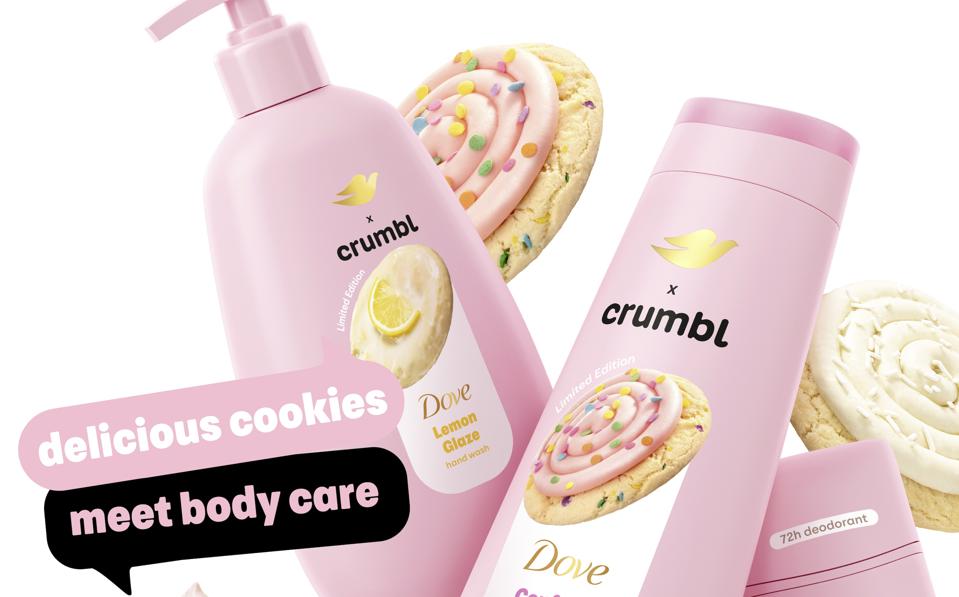
Dove’s collaboration with Crumbl, launched in U.S. Wal-Mart stores, was a major success.
Unilever
In the fiercely competitive world of marketing personal care products, responding to trends in consumer preferences and media habits has become a necessity. Unilever Personal Care (PC), led by Chief Marketing Officer Nuria Hernández-Crespo, is repositioning the group’s portfolio from hygiene products people need to superior products they desire. The strategy has been built around three main pillars: driving desire at scale, investing in social-first demand-generation, and embedding itself in culture.
I interviewed Hernández-Crespo, a seasoned global executive and Harvard MBA, to gain deeper insight into the rationale behind the repositioning and the way it is being implemented. Regarding the need for the transformation, she notes, “The personal care industry is going through an exciting transformation with consumers demanding more than hygiene products – they want premium brands that make them feel confident, joyful, and reflect their individual needs.”
Building Desire At Scale
Unilever PC is using innovation as part of its effort to build desire at scale. For example, the company has focused on innovating by working with master perfumers to elevate the AXE brand from a mass-market body spray to a premium, confidence-boosting fragrance that combines sleek packaging with nuanced scent profiles.
SAO PAULO, SP, BRASIL – Nuria Hernandez Unilever.
Diego Padgurschi / Divulgação
Hernández-Crespo cites additional examples of innovative product changes that have built desire at scale, “Our iconic Dove beauty bar is now available with various multiple benefits – from antibacterial to gentle exfoliation to relaxation infused with lavender and chamomile or rejuvenation with pomegranate and hibiscus tea scent,” she says, “Similarly, we launched Dove serum shower collection, which uses patented technology and active face care ingredients in a body wash format. This is what we call ‘driving desire at scale’ – premium product innovation, elevated aesthetics, and captivating sensorials that ensure our brands stand out, are remembered, and are chosen.”
As CMO of a company with high-profile brands, Hernández-Crespo believes that product innovation should be aimed at empowering consumers. “Unilever Personal Care is a €13.6 billion business with a legacy for being market-making, category-shaping, and ground-breaking,” she observes, “ With our global portfolio of much-loved brands, including Dove, Dove Men+ Care, Rexona, LUX, AXE, Lifebuoy, Closeup, and Pepsodent, we empower more than a billion people every day with confidence, well-being, and self-care. This category has raised the bar on aesthetics, storytelling, and experience – and with our geographic footprint and portfolio of Power Brands, we’re well placed to lead this growth.”
Unilever has innovated by offering new full body deodorants under multiple brands, including Degree.
Unilever
In terms of how the innovation transpires, Hernández-Crespo elaborates, “With cutting-edge science and technology, we are crafting superior products that go beyond simply meeting people’s hygiene needs to quality products they desire. That means crafting emotionally resonant brands that elevate everyday rituals into moments of delight. It’s about creating a superior experience – elevated aesthetics to enhance the look and feel across every touchpoint, and captivating sensorials that immerse consumers in scents and textures they’ll remember.”
Social-First Demand Generation
In a world where more than three-quarters of advertising expenditures are made in digital media, it makes good sense to focus on social media as a mechanism of turning attention into action. Unilever PC is doing exactly this, with its social media team creating more than 300 social media assets per week, enabling a continuous presence that responds in real time to culture and conversation.
A good example of the depth of the company’s social media efforts is Rexona’s Locker Room, a real-time content hub aimed at European sports fans that delivers up to 10 posts a day with creators, athletes, and match commentary to drive fandom and cultural relevance across markets (see below for a video from the site featuring British footballer Ebere Eze).
Dove’s partnership with viral cookie shop Crumbl, which launched in U.S. Walmart stores, is a significant success story. The brand launched a limited-edition collection created by Dove, which engaged with online communities, and identified three of Crumbl’s fan-favourite flavors before designing fragrances to match. The limited-edition line featured body wash, deodorant, scrub, and liquid hand wash across three indulgent gourmand scents: Confetti Cake, Lemon Glaze, and Strawberry Crumb Cake. The exclusive range marked the first time the company had ever turned Dove’s packaging pink in a nod to Crumbl’s brand world.
Hernández-Crespo describes the specifics of the success of the campaign, “We partnered with creators and Crumbl superfans to fuel anticipation, then unveiled the ad during the NFL Christmas Day game on Netflix – when Walmart traffic peaks. the impact spoke for itself – sold out in record time and was one of Walmart’s biggest launches of the year. The campaign generated over 3.2 billion impressions and more than 53 million video views, with over half of buyers completely new to Dove.”
In general, Unilever’s social media strategy is designed to turn attention into action. According to Hernández-Crespo, “Driving social-first demand generation is core to how we grow. In a world where attention is won or lost in one scroll, our 300-asset-a-week engine turns cultural sparks into commerce. We design for platform-native engagement and build creator-led campaigns that feel authentic. The strategy works because it’s built to convert: real-time insights shape the creative, creator CTAs drive direct action, and media optimized in real time for engagement and sales. It’s about recognising what people are feeling and showing up with empathy, relevance, and intention.”
Embedding Brands In Culture Via Marketing
Unilever PC believes that culture is today’s most powerful growth engine— and is focusing on showing how sports, music, unexpected collaborations, and working with creators can move brands into the cultural spotlight. In terms of sports, Unilever PC is an Official Sponsor of the FIFA World Cup, and the UEFA EUROs (both men’s and women’s games, as well as other tournaments including WAFCON, Gold Cup, the women’s rugby world cup, and more). One successful campaign used Rexona’s global platform “It Won’t Let You Down” to deliver locally tailored activations that reflected fan culture and national pride. In each market, the message was adapted through athlete-led storytelling, Lucy Bronze in the UK, Giulia Gwinn in Germany, and Vivianne Miedema in the Netherlands, each embodying a unique expression of confidence under pressure. This global-local approach strengthened connections across markets, and the company now has even bigger plans ahead of the FIFA World Cup 2026, with activations planned across more than 100 countries.
In terms of music activations, Dove sponsored the Charlie XCX “Brat Tour.” Here, Dove’s “Hot Seats” campaign leveraged the music festival season to promote its whole body deodorant line by offering fans a chance to win tickets to the sold-out Brat 2025 arena tour through a scavenger hunt that blends digital and real-life elements, engaging consumers and addressing body odor concerns at music events. Other collaborations have included Dove Men+Care BEASTMODE campaign, which positioned the brand at the intersection of sport, inclusion, and emotional connection. The campaign partnered with Marshawn Lynch which focused on real, relatable routines and the emotional power of self-care, using humor and authenticity to introduce Dove Whole-Body Deodorant in a way that resonated with men across cultures.
Building brand love is the ultimate goal of embedding these brands in culture. “Embedding brands in culture helps convert desire into deep brand love,” says Hernández-Crespo. When our brands show up on match day, at a festival, or in a collab drop, buzz converts to baskets. Threading our Personal Care brands through sport, music, and creator communities transforms fleeting moments into loyalty and growth.” She cites the need to spark connection, participation, and conversion, all while creating cultural memories that last well beyond the event, as being what drives the success of these activations and stresses the importance of having something meaningful to say to stand out from the crowd.
At a time when we are seeing some companies lose their focus on consumer satisfaction, it is refreshing to see Unilever PC’s concerted efforts to build deeper resonance with consumers via innovative marketing strategy.
link