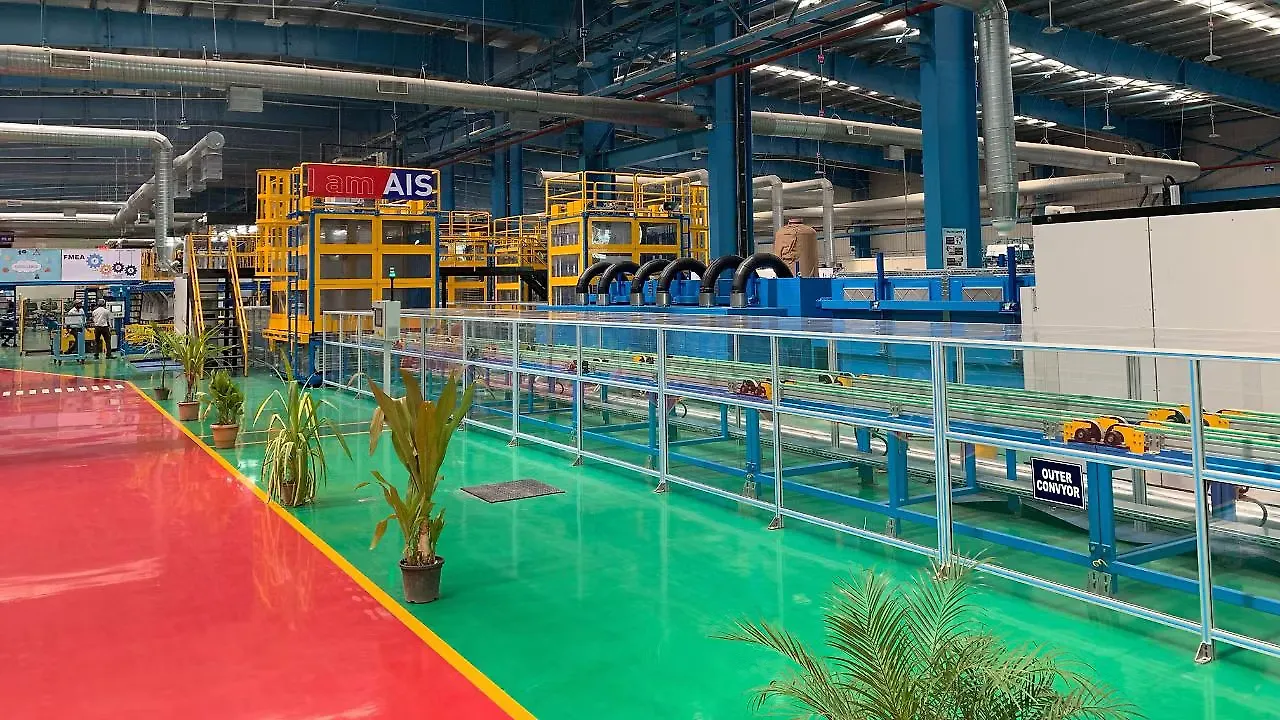
The Patan plant of Asahi India Glass Ltd (AIS), India’s leading automotive glass manufacturer, is gearing up to use local float glass – green, dark green UV-cut, and solar control glass – the key raw material sourced from the company’s new float glass facility in Soniyana, Rajasthan. This initiative, while meeting customer objective of deep localisation, will also strengthen its capability of building a strong and resilient supply chain in a dynamic environment.
Speaking to Mobility Outlook, Amit Sood, Sr. Executive Director – Sales & Marketing, AIS, said, the first phase of the Patan plant was set-up in year 2019 but started commercial supplies in year 2021 due to COVID related industry slowdown. It provides integrated glass products and solutions to its customers including state-of-the-art press bend laminated windscreens and large sized laminated sunroofs.
Driven by deep localisation initiative by key OEMs like MSIL highlighting need to have a self- reliant supply chain including localisation of critical raw material and to provide impetus to Make in India, AIS has recently commissioned a greenfield facility in Soniyana, Rajasthan for production of high-quality float glass for automotive applications. Additionally, AIS has two float glass plants located in Taloja, Maharashtra and Roorkee, Uttarakhand which are predominantly catering to architecture business division besides having capability to produce auto quality float glass as well. At present the total capacity of all three float plants put together is 2150 MT/day.
Today, the Deming award company has five dedicated automotive glass manufacturing plants located at Bawal (Haryana), Chennai (Tamil Nadu), Roorkee (Uttarakhand), Taloja (Maharashtra) and latest at Patan (Gujarat).
Besides, it has 4 auto glass advanced sub-assembly units Bidadi (Karnataka) (for Toyota), Pune (Maharashtra) (for M&M, Tata Motors, SAVW and other OEMs), Anantapur (Andhra Pradesh) (for Kia) and the latest start of the art sub-assembly unit at Kharkhoda (Haryana) (for Maruti Suzuki), Sood said.
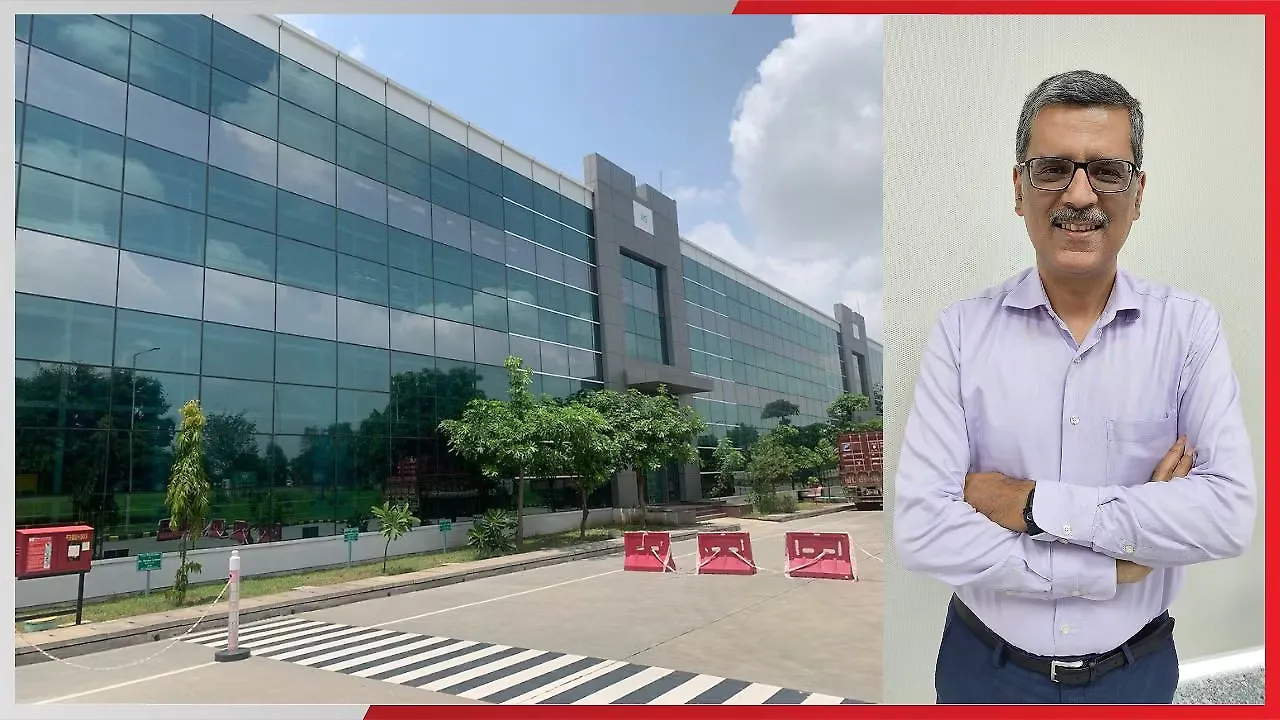
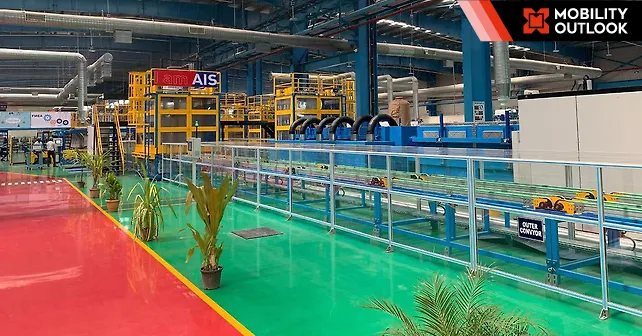
Left: Patan plant; Right: Amit Sood
Visiting Patan Plant
On a recent visit, it was evident that the plant has been built with a singular purpose in mind – serve customers faster while setting new benchmarks in glassmaking technology and sustainability. Its fully integrated, end-to-end process minimises handling, reducing the risk of defects and improving quality.
According to Sood, the Patan plant building itself is a showcase of the company’s capabilities. Clad in double-glazed, high-performance glass made in-house, it reduces heat load while letting in abundant natural light. This design, now inspiring other factories, is part of the Patan plant’s journey from a IGBC (Indian Green Building Council) gold-rated facility towards targeted platinum rating. With technology, sustainability, and customer proximity all under one roof, the plant reflects the future of responsible and efficient manufacturing.
Sood said sustainability is woven into every operation at AIS. For example, the new greenfield float glass plant at Soniyana, Rajasthan runs on renewable energy from solar, wind, and captive sources, with a goal to meet 95% of its energy needs from renewables by next year. It is also India’s first glass plant to use green hydrogen, produced on-site, for generating hydrogen and nitrogen gases essential in glassmaking—a process that transforms sand into high-performance products while cutting emissions, he added.
Art Of Laminated Glass Making
The Patan plant makes laminated and tempered glasses including value added products like encapsulated glasses and complex glass assemblies like windscreens with ADAS. In the world of automotive safety, laminated glass is more than just a windshield—it’s a carefully engineered barrier designed to protect passengers while offering clear visibility. At the plant, this craftsmanship unfolds through a precise sequence of processes.
It begins with raw glass sheets – one for the outer side facing the road, and the other for the inner side facing the cabin – cut to exact dimensions. The inner sheet receives a layer of black ceramic printing, often seen as the dotted border on windshields. Both sheets then move together to the bending stage, where they are placed on a tool shaped like the vehicle’s body. Under heat and gravity, the glass sags into the required curve. Glass bending can also be achieved by using state-of-art press bending technology which provides accurate surface control essential for production of high-class technology products like laminated windscreens with AR-HUD and ADAS.
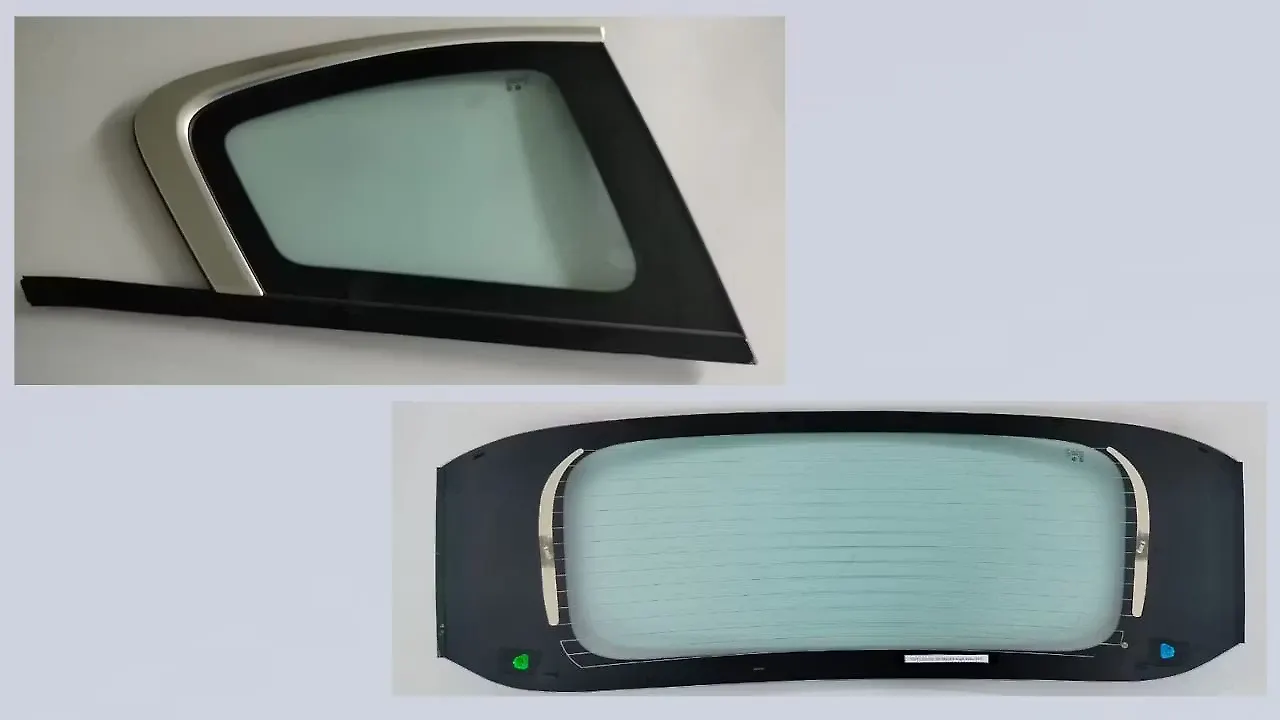
Special glasses
Precision Printing, Perfect Pairing
Every sheet of glass begins its journey with meticulous centering before being transferred by shuttle to the printing line. Here, automated silk screen printing applies designs, logos, and emblems—much like printing on a business card, but with far greater precision. A camera system inspects edges and barcodes, ensuring every piece meets the industry’s increasingly strict zero-defect standards.
Each glass panel carries a unique ID from the cutting stage, allowing the system to identify whether it’s an inner or outer sheet. The cameras read the ID, verify orientation, and apply the correct printing recipe. If there’s a mismatch or defect, the glass is automatically removed, with details and images stored for operator review.
After bending, the inner and outer sheets are paired with a polyvinyl butyral (PVB) layer in between. Excess PVB is trimmed before the Continuous Vacuum Ring System (CVRS) removes trapped air. Customer-specific features – like integrated parts such as rain sensors or interior rear-view mounts – are added using special adhesives or tapes that can withstand a vehicle’s lifetime of use. The process runs through hot zones to ensure perfect edge sealing, transforming the PVB from translucent to clear. The result is glass that’s not only structurally sound but precisely tailored to the vehicle’s design and performance needs.
The final bonding happens in an autoclave—essentially a large pressurised oven—where heat and pressure fuse the layers together, making the glass strong and shatter-resistant. After passing optical checks and other quality tests, the glass may receive additional fittings like locator pins, rubber dams, bottom moldings depending on customer needs.
From cutting to final inspection, every step is tightly controlled, with rejection rates kept significantly low. This blend of precision engineering and quality assurance ensures that every windshield not only meets global safety standards but also delivers clear, distortion-free views for drivers.
How Tempered Glass Takes Shape
While laminated glass is used mainly for windshields, tempered glass forms the backbone of other critical vehicle parts—front and rear door windows, backlights, sidelights, and even large sunroofs. At the plant, these pieces are crafted with the same precision as laminated glass but follow a different path to strength.

The process begins with cutting the glass to the exact size and shape needed. The inner surfaces are then printed, often with patterns or borders for aesthetics and functionality. From here, the glass moves to the bending stage, where it is shaped either by press bending for complex curves or gravity bending for simpler forms.
Unlike laminated glass, which is strengthened through annealing, tempered glass undergoes quenching—a rapid heating followed by fast cooling. This sudden temperature change locks tension into the glass, making it several times stronger than ordinary glass. The result is a panel that can withstand greater impact and, if it does break, shatters into small, blunt fragments for safety.
Every tempered glass panel—whether a sleek sunroof or a sturdy side window—emerges from this process tougher, safer, and ready to meet the demanding conditions of the road.
Just-In-Sequence
All the plants of AIS run their operations with precision, following the Japanese “Jumbiki” concept of just-in-sequence and just-in-time “JIT” supply to OEMs, ensuring the right product reaches the line exactly when needed. With an annual capacity of 8.8 million laminated windscreens and 6.4 million car sets of tempered glass, the company is already a major force in automotive glazing. But it is not stopping there; plans are on for both brownfield and greenfield expansions to match the steady rise of the automotive market. Every AIS plant is built for flexibility, allowing quick adjustments to meet shifting demand without compromising quality, he explained.
By staying at the forefront of technology and maintaining world-class manufacturing standards, the company ensures its customers are equipped to meet the evolving needs of both domestic and export markets—driving growth, Sood signed off.
Also Read:
From Following Specs To Setting Standards – AIS Scripts New Chapter In Auto Glass
link